I designed and crafted an electric guitar during my visit to the Korea National University of Arts (K-Arts). The intent of designing a full hollow body in stainless steel stems from a question I had at the time of designing: how much do the physical properties of the body affect the tone of the electric guitar? Keeping in line with the telecaster’s characteristic shape, the guitar strings run through the body and are anchored to the back.
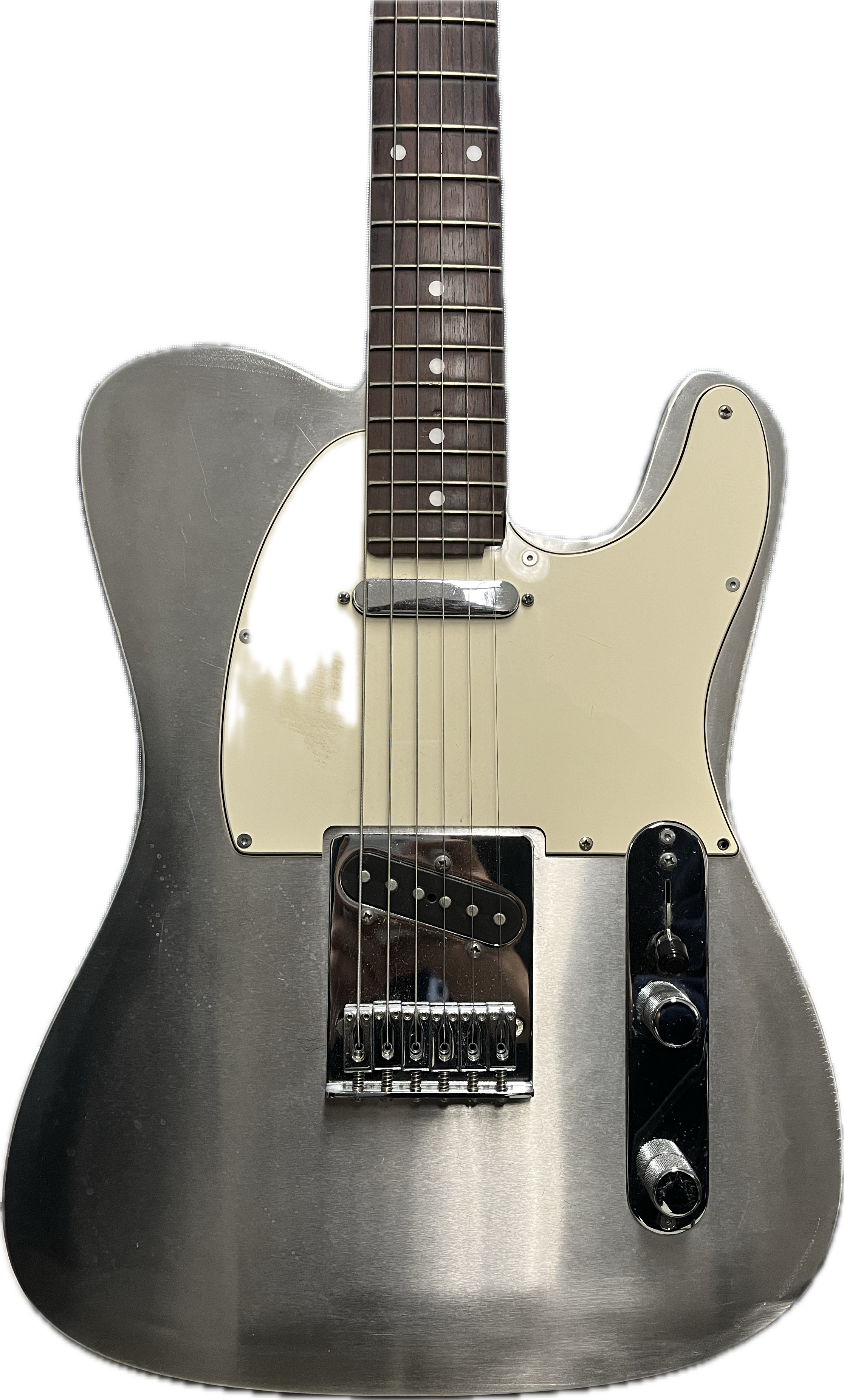
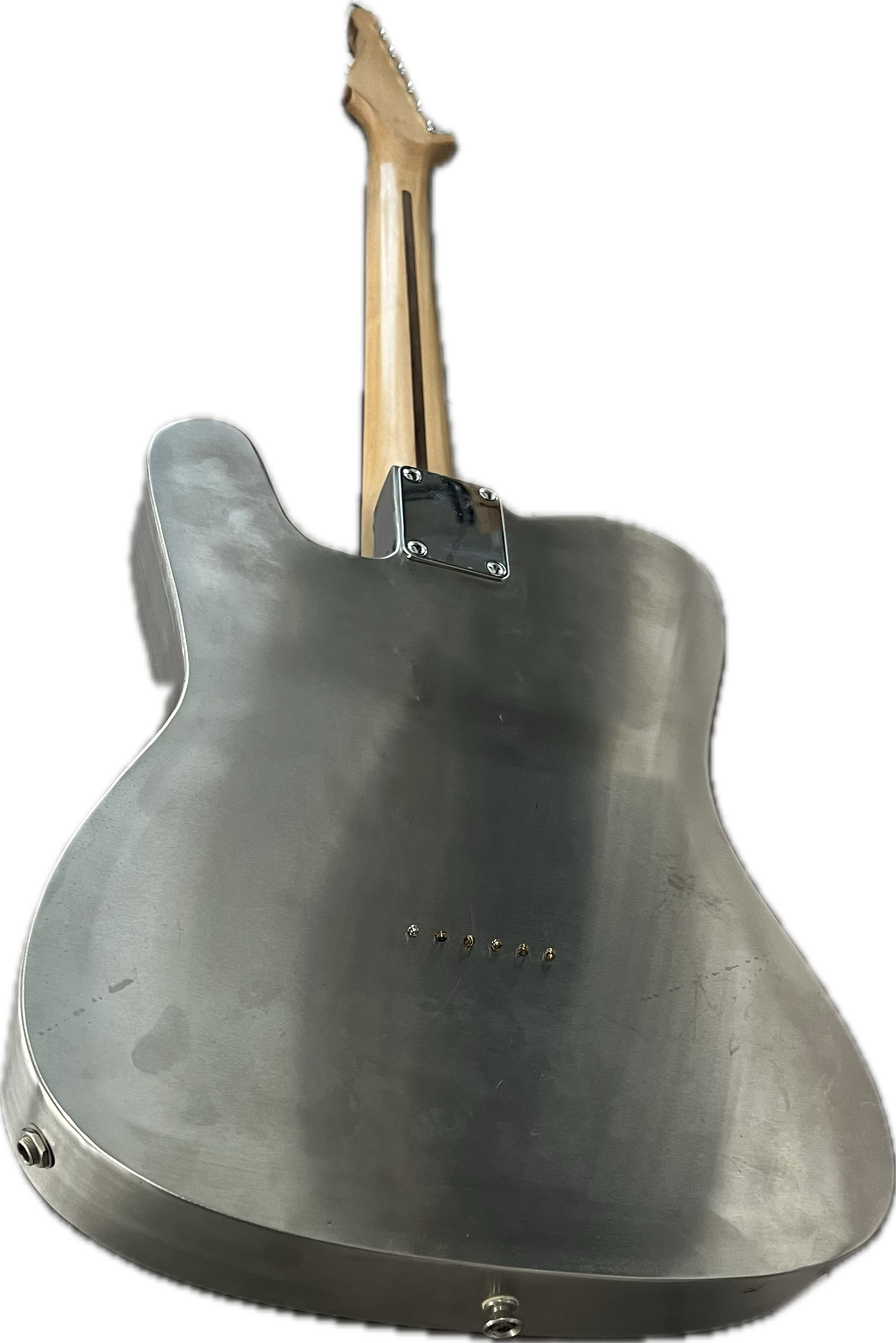
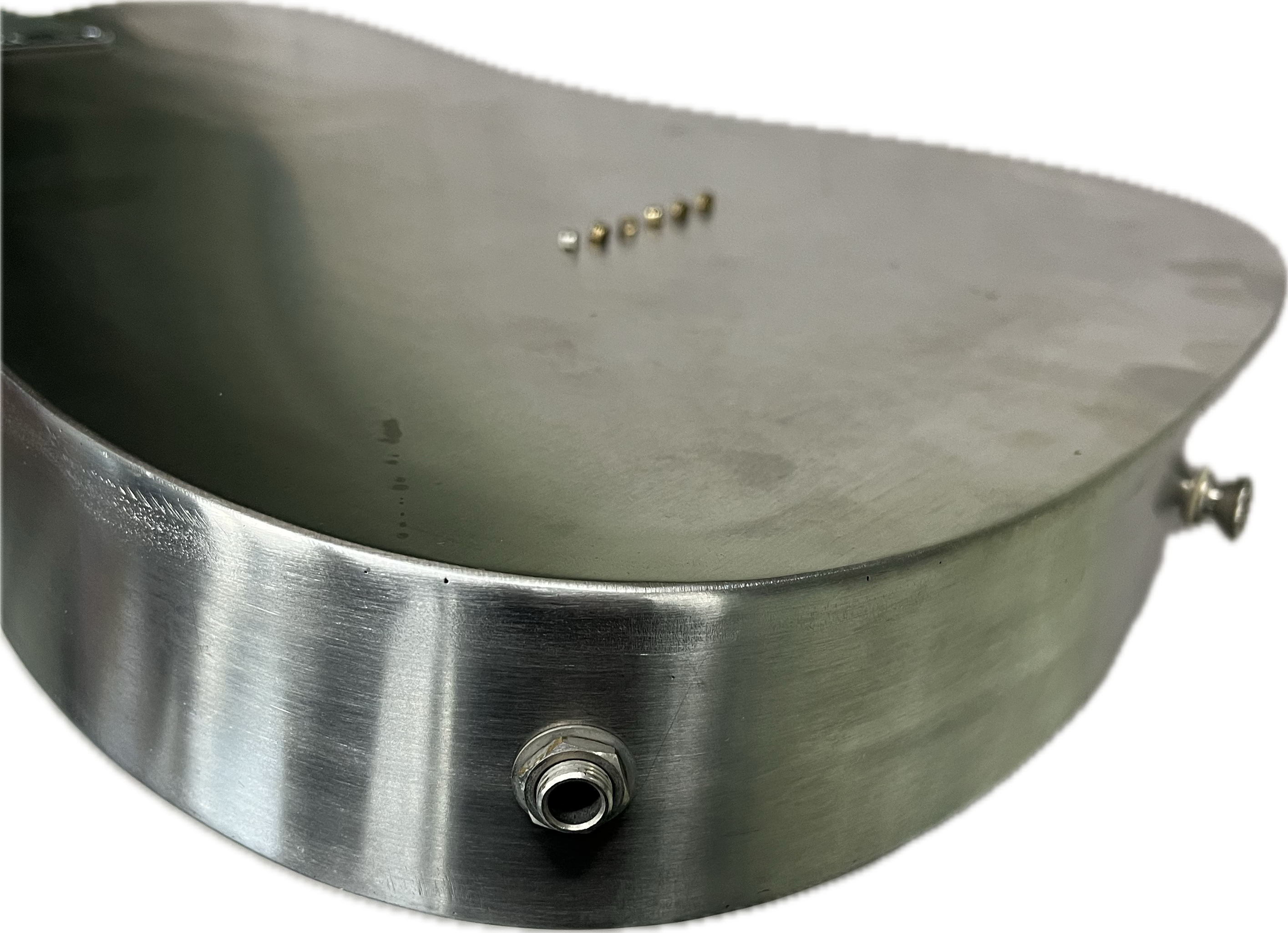
Although the body is completely full hollow, it weighs quite a bit since it is made of a steel. I’m pretty sure it’s heavier than a Les Paul, but it feels like it’s very slightly more reverberant, especially since the strings run through the hollow body to the back of the guitar. In a usual electric guitar, the strings would go through a solid-wood body and connect to a spring-mounted backplate at the back (which creates a little bit of nice reverb). And in an acoustic guitar, the strings would connect to a bridge at the top. It also differs from a typical resonator guitar in that it has magnetic pickups without resonators. In this guitar, since the top and back are both resonating, creating a bit of reverb, so it could be said that the entire empty body is working as as a ‘backplate’. In order for the hollowed body to support the tension of the string, sound posts are installed inside the body.
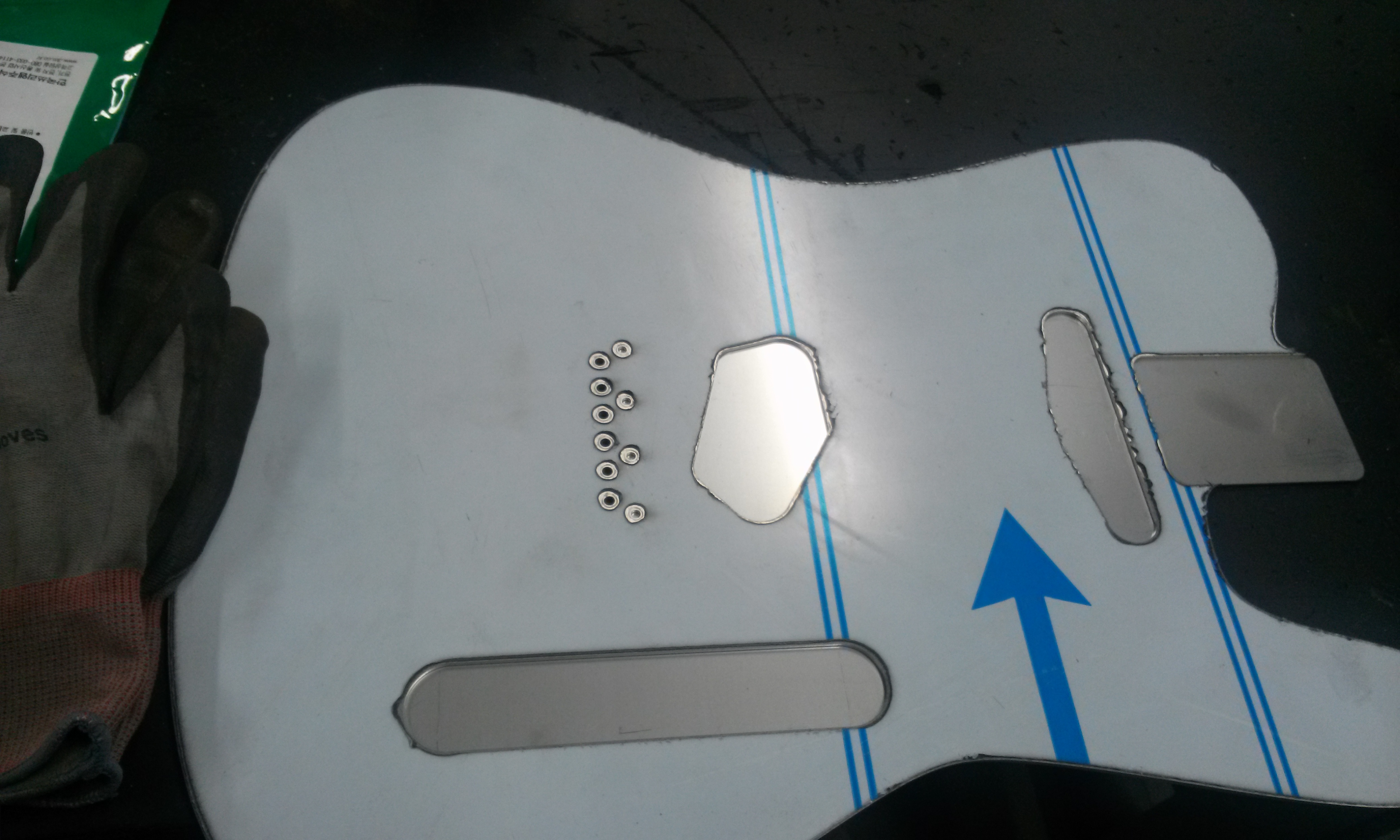
Laser-cut stainless steel plates before welding.
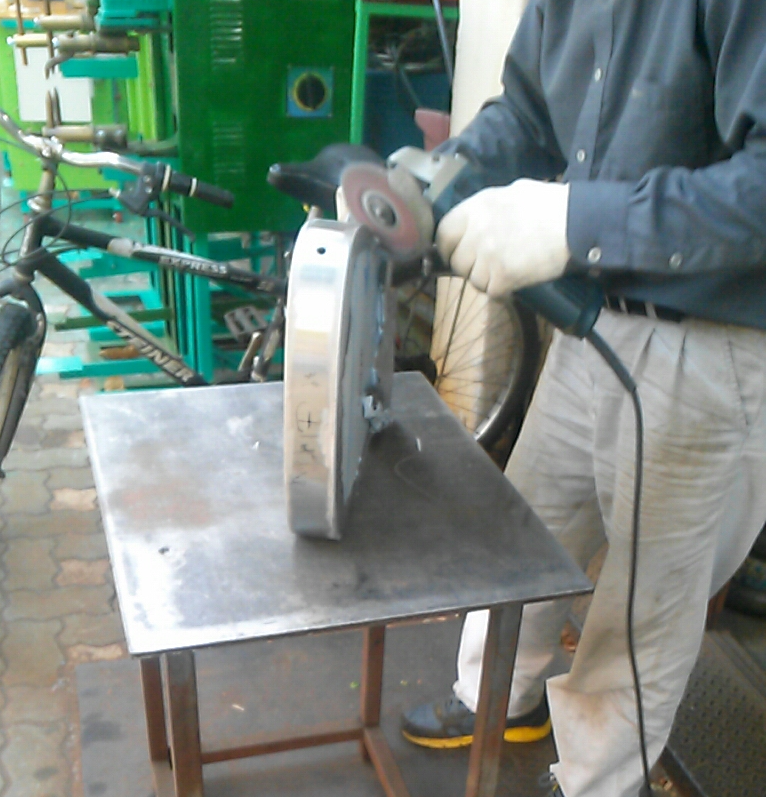
Polishing the body after welding
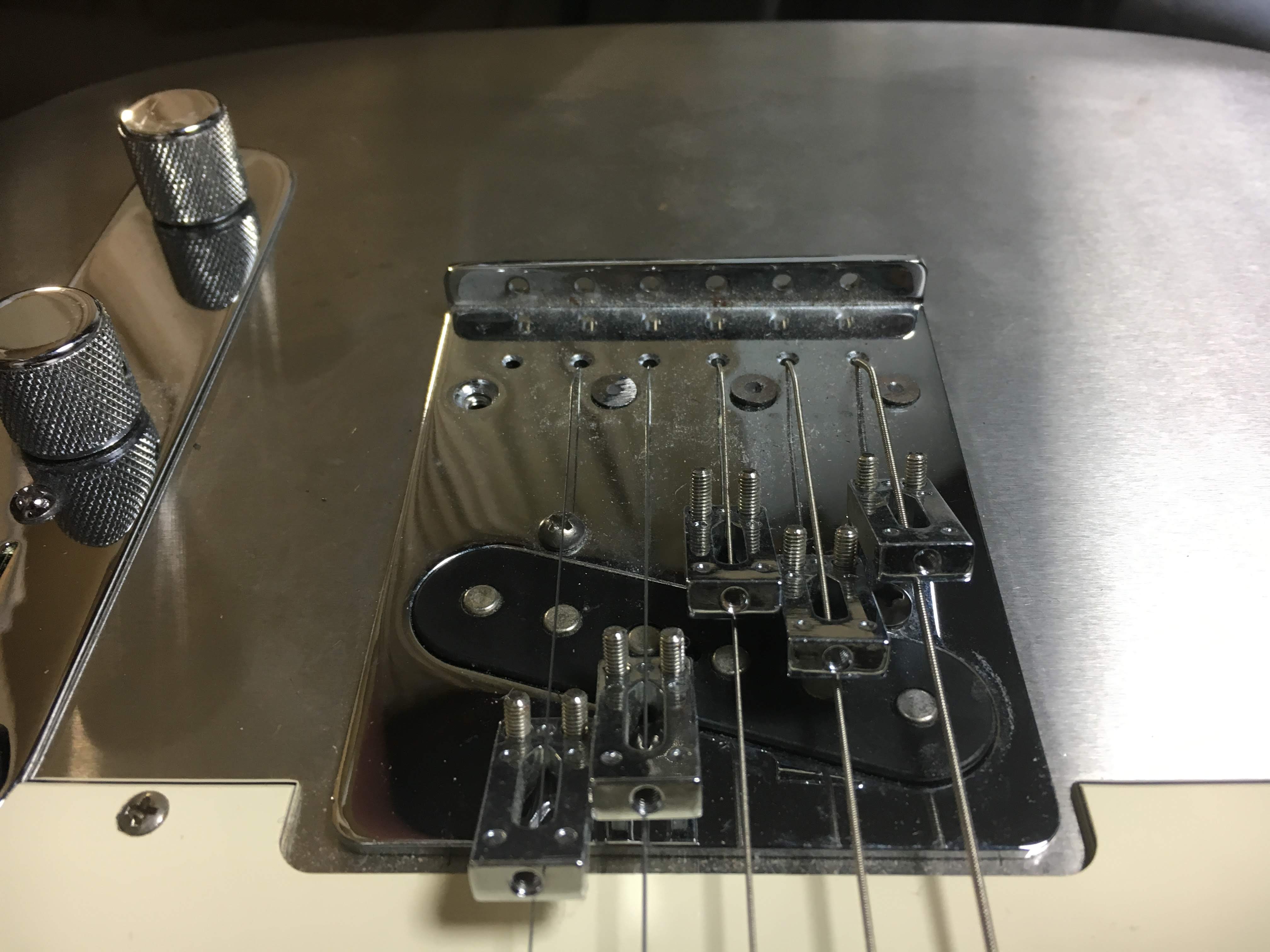
The bridge finally mounted after all the troubles.
Stainless steel plates were cut and bent, then welded together to create the full hollow stainless tin guitar body. The body shape was adopted from Fender Telecaster. The stainless steel plate that forms the top of the body was cut to install the guitar parts, including the pick guard, volume knob, and bridge, I connected the circuit for each part and install the strings.
Me playing the tin guitar I made.
